
Why insurance AI pilots stall before production
- Written by
- Riska Underwriting TeamInsurance operations & underwriting
- Published
- Length
- 6 min read
Buy a model, point it at the documents, measure accuracy
Eleven months ago somebody stood in your conference room and pulled fourteen fields off an ACORD 125 in about four seconds. The room was impressed, and it was right to be. Nobody has mentioned that project since March.
The approach that produced the demo deserves to be stated at its strongest before anyone takes it apart. Buy or build a model. Point it at the documents you already receive: the applications, the statements of values, the loss runs, the schedules of vehicles. Hold out a stack of forms it has never seen. Count how many fields it gets right. Ship when the count is good enough.
That is a sound way to start. It asks the cheapest question first and it answers in a week rather than a quarter. If a model cannot read a broker's schedule scanned at 150 DPI, nothing downstream matters, and you want to find that out before you have designed a workflow around it. Accuracy on held-out documents is a real measure of a real thing.
Nor is the outcome unusual. Capgemini's World Property and Casualty Insurance Report 2026, published in May and built on responses from 344 senior insurance executives, puts 10% of property and casualty insurers at scaling AI as a core capability and 60% still in exploration or proof of concept. Most of that 60% is not a heap of failed experiments. It is a heap of experiments that answered their question and then had nowhere to go.
Accuracy was the only question the pilot ever asked.
The answer is right. Now put it somewhere.
Take a value the pilot gets right. Total insured value, lifted off a statement of values, correct to the dollar.
Now put it on the account. Intake has a field called TIV that a producer types into. The policy record does not have that field at all; it carries a building limit and a contents limit per location, and rating reads the sum of those. The portfolio view has a column called Total Exposure, added two years ago by someone answering a different question, which includes business interruption.
The model did not get anything wrong. There was nothing for it to be right about. Every write into that account is now a judgment call about which of three fields the value belongs in, and a judgment call is precisely the thing the project set out to remove.
So a person reviews each one. That is the correct response, and it is also the end of the business case, because reviewing a proposed value takes longer than typing it did.
Then it is March. A broker disputes the schedule you quoted against and asks what the total insured value on that account was on the day the quote went out. You can find today's value. You can probably establish that it changed. What you cannot produce in an afternoon is which system wrote it, from which page of which document, on whose authority, and what the row read before.
None of that is a model problem.
The pilot cycle
Five stages, and the fifth one leads back to the first. Nothing in the cycle is a model failure.
- 1
Demo
a model reads the form correctly in front of everyone
- 2
Integrate
the answer needs one field and there are three
- 3
Add review
a person checks every write before it lands
- 4
Throughput drops
the queue moves slower than the manual process did
- 5
Quiet shelving
the pilot is renamed a proof of concept
and back to Demo
What a regulator can already ask you for
The NAIC adopted its model bulletin on insurers' use of AI systems on December 4, 2023. As of April 1, 2026, twenty-four states and the District of Columbia had adopted it, beginning with Alaska in February 2024 and taking in Illinois, Pennsylvania, Michigan and New Jersey along the way.
Be precise about what that is. It is a model bulletin, not a statute and not a test. Departments adopt it one at a time. Its own closing section says the goal "is not to prescribe specific practices or to prescribe specific documentation requirements", and it says repeatedly that existing unfair trade practice and unfair claims settlement law already applies whether a person or a model made the call. Anyone describing it as a new compliance regime is selling you something.
What it does is tell you what you will be asked for. Section 4 is the part worth reading twice: regardless of whether you have written the program down, in an investigation or market conduct action you can expect to be asked about the development, deployment and use of any AI system that touched a consumer decision. Inventories and descriptions of the models. Where the data came from and what condition it was in. Validation, testing, retesting, and evidence that you looked for drift. All of the same for anything you bought, because the bulletin draws no line between a system you built and one a vendor sold you.
One factor sits underneath the rest. When the bulletin describes how much control a use case needs, one of the five things it weighs is how far humans are involved in the final decision. Answering that means producing records, not architecture. If the answer to "who approved this" lives in a thread in someone's inbox, you do not have an answer.
This is not a corner case for four carriers. In the NAIC's own surveys by line of business, 88% of the 193 auto insurers who responded in 2022 said they use, plan to use or plan to explore AI or machine learning. The figure was 70% of 194 home insurers in 2023, 58% of 161 life companies in 2023, and 92% of the 93 health insurers who responded in 2025. The auto number is the oldest of the four and worth discounting accordingly; the health one is the freshest and the highest.
Four states sit outside that count with insurance-specific guidance of their own rather than an adoption of the bulletin: California, New York, Texas and Colorado. Colorado has gone furthest, with its own insurance regulation in force since November 2023 and amended again in October 2025. And the supervision is becoming more operational: twelve states were piloting an AI systems evaluation tool as of March 2026, with adoption expected at the NAIC's fall national meeting.
What a demo proves against what production needs
Six questions a buyer asks before anything goes live. A pilot answers the first one.
| The question | What a demo proves | What production needs |
|---|---|---|
| Can it read the form | Yes, on the ten documents in the demo set | Yes, on the scanned page nobody chose |
| Can it write to the record | Untested. The demo ends at the answer | One field, agreed in advance, the same one every time |
| Which field did it write | The engineer who built it remembers | Named on the row, still readable in March |
| Who approved the write | Nobody. It was a demo | A named person, with the time they did it |
| Can you explain it in a market conduct exam | You can explain how the model works | You can produce the decision and everything that fed it |
| Can you change the rule without shipping code | The rule is buried in the prompt | The rule is configuration, versioned and dated |
An assistant is only worth what the system underneath it can guarantee
The interesting question was never whether a model can read the schedule. It is whether there is one place to put what it read, and whether the write leaves something behind that holds up in March. That is where the effort went.
So there is one mesh. Objects, attributes and relationships are defined once, in your own words, and extraction, rating, workflows, reporting and the assistant all resolve against those same definitions. The Data Mesh is the whole idea, named: nothing keeps its own copy, so total insured value is one field rather than three, and a correction lands once and is true everywhere it is read.
Changing that model is product definition rather than an implementation project. Add an object, an attribute or a relationship in the data model and it is usable in every feature immediately. Objects, attributes, views, document types and rate books version together and publish as one release, which means a rule you got wrong is a dated change you can point at rather than a deploy nobody logged.
Only then does the assistant become interesting. Ask Riska runs as the person asking, so it reaches the records that account reaches and nothing beyond them. Each lookup names itself as it runs and stays in the thread, so you can see which query produced a figure before you act on it. A record edit arrives as a preview showing every field it would set and anything that failed validation, and nothing is written until a person approves it. The audit row that results is attributed to the assistant and to the conversation it came from.
None of that makes the model read a schedule any better. It makes the answer something a person will act on, and it turns the paragraph a regulator asks for into a query rather than an excavation.
Questions we get asked
- Do I need to tell my regulator I am using AI?
- There is no general filing that announces it. What twenty-four states and the District of Columbia had adopted as of April 1, 2026 is the NAIC model bulletin, which sets the expectation that you develop and maintain a written AI systems program and can produce it on request. In an investigation or market conduct action you can expect to be asked how any AI system touching a consumer decision was developed, deployed and used, whether or not you wrote that program down first. Giving affected consumers notice that AI systems are in use is one of the bulletin's guidelines.
- Isn't this solved by a better model?
- No. A better model reads the document more accurately, and reading was rarely the step that failed. The steps that fail are choosing which field the value belongs in, getting a person to approve the write, and being able to say six months later what changed and why. None of those improve when the model does.
- What is the NAIC AI model bulletin?
- It is the Model Bulletin on the Use of Artificial Intelligence Systems by Insurers, adopted by the NAIC on December 4, 2023. It asks insurers to keep a written AI systems program covering governance, risk management controls and internal audit, spanning the full life of a system and applying to vendor systems as well as ones built in house, and it tells insurers what a department may ask for in an examination. It is adopted jurisdiction by jurisdiction rather than automatically, and it says explicitly that it does not prescribe specific practices or documentation formats.
- Can an AI system make an underwriting decision?
- Nothing in the NAIC model bulletin forbids it. The bulletin treats how far humans are involved in the final decision as one of five factors setting how much control a use case needs, so the more the system decides alone, the more governance, testing and documentation is expected around it. Existing law on unfair discrimination and unfair trade practices applies to the outcome either way. The practical question is whether you can show who decided and on what basis.
- How do I tell whether my problem is the model or the record?
- Ask where an extracted value is supposed to go, and count the answers. If intake, the policy record and the portfolio report each name it differently, the model has nothing to be right about and no amount of accuracy will help. That is a data model problem wearing an AI problem's clothes.
- Do I have to rebuild my data model before I can use AI at all?
- No, but you do have to settle the fields the AI will write to, and that is much smaller than a rebuild. Pick the handful of values a decision actually turns on, define each one once, and give the write somewhere to be reviewed and recorded. Most pilots stall long before they run out of model.
Keep reading
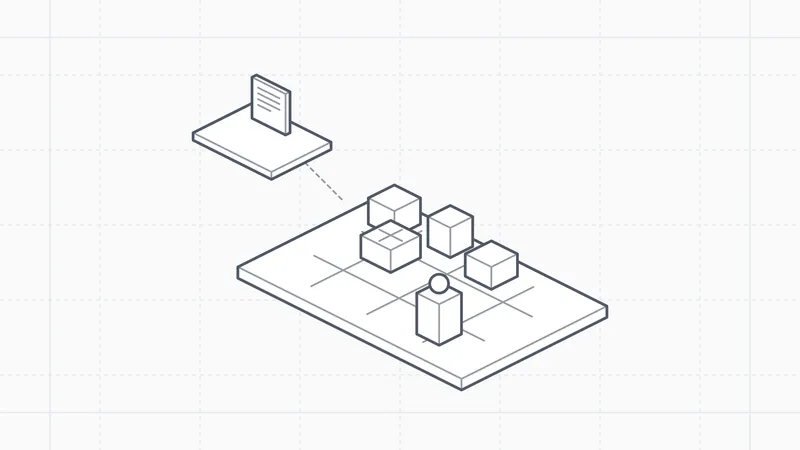
Why the agentic era will break insurance systems
Insurance systems were built for a person who opens one account and finishes it before the next one starts. More product lines, and a broker's agent sending the same risk to more carriers, mean more submissions and more operations than that person can decide on. Anthropic hit the same wall with git: about 2,500 merges a day in May 2026, more than 30,000 by September, and the tool built for a smaller day was the bottleneck. The platform that cannot score, refer and answer while the submission is still open loses the account.
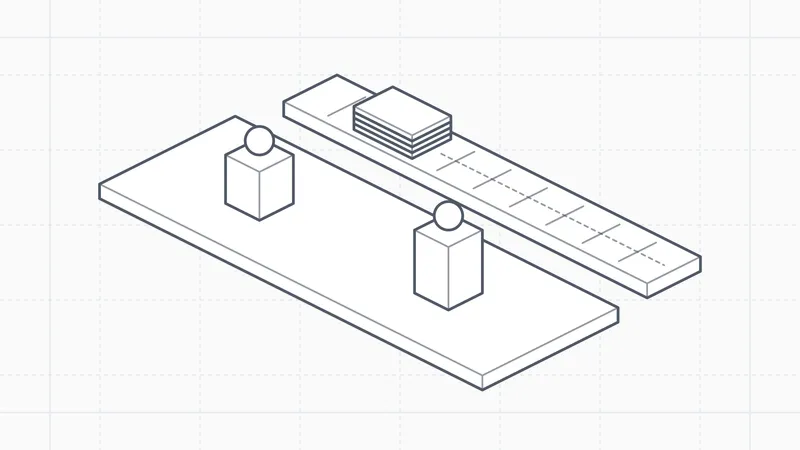
What a bordereau is, and why delegated authority still runs on one
A bordereau is the schedule of risks, premium or claims an MGA sends its carrier under delegated authority. It goes monthly or quarterly, inside a window after the period closes that the binder sets. That lag was a limit of the software, not of the business. When the bordereau is a view of live records, the carrier, the MGA and their agents read the same numbers without the month-end export. Live, not exported.
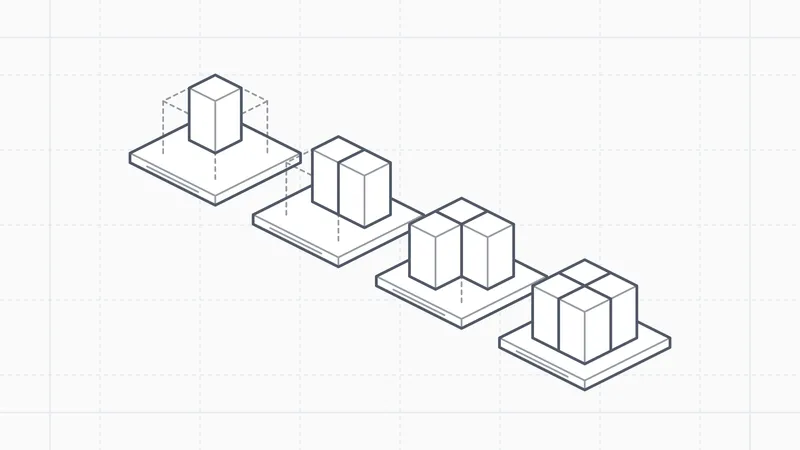
Context compounds: why an underwriting agent is only as good as the file
An agent acts on whatever context it finds. In underwriting, the most valuable context never reaches the policy system: why a risk was declined, which broker's schedules are always wrong, what was quoted last year and why it was lost. Put that on the record, tied to the rules each decision ran under, and every submission makes the next one cheaper to underwrite.
See it on your own submissions.
Bring a real ACORD form and a real appetite guide. We will run them through Riska on the call.